
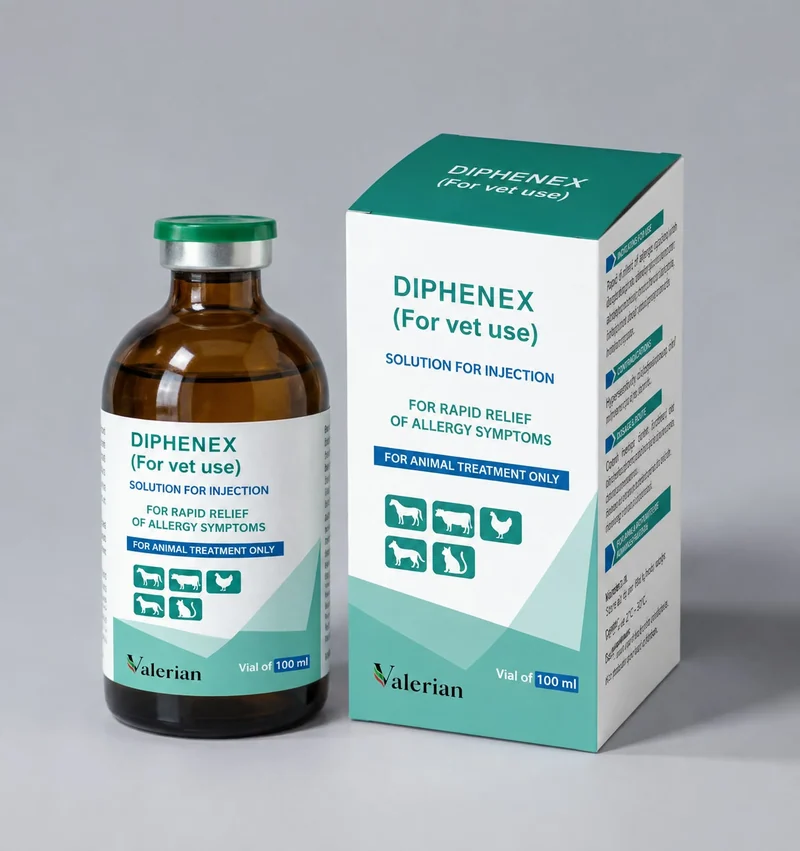
A closer look at DIPHENEX.
The product belongs in a veterinary discussion about the cause and severity of suspected allergic signs. An allergy-focused product description is not a diagnosis, and symptom relief should be considered alongside the underlying trigger and the animal’s overall condition.
What is in the formulation?
| Component | Available formulation detail |
|---|---|
| Diphenhydramine hydrochloride | 20 mg per ml |
The product’s care focus.
- Diphenhydramine hydrochloride is the named active ingredient.
- A stated strength of 20 mg/ml.
- Presented within supportive care rather than the antibacterial or parasite ranges.
Presentation, route and administration.
Veterinary injectable presentation; the route and administration instructions must be confirmed for the animal.
Product-specific directions
No complete numerical dosing schedule is established by the available information. Ask the veterinarian for the exact amount, route and timing.
Build a more useful care conversation.
Prepare these details when discussing DIPHENEX with your veterinary team.
- Describe the signs, their onset and any suspected exposure or recent treatment.
- Provide the animal’s species, weight and relevant medical history.
- Confirm the treatment plan and the signs that require reassessment.
Before you take the next step.
What should I request for DIPHENEX?+
Ask for the current product specification, the available pack size and directions for your species and market. For a commercial enquiry, include your organisation, country and the quantity or documentation you need.
Does a care category establish suitability for my animal?+
No. The exact formulation, animal’s condition and local product authorisation matter. The treating veterinarian should confirm suitability, administration and any applicable food-production withdrawal requirements.
For veterinary professionals. Product information is an overview; the current locally authorised instructions and prescribing veterinarian determine use. Pack presentation may vary.